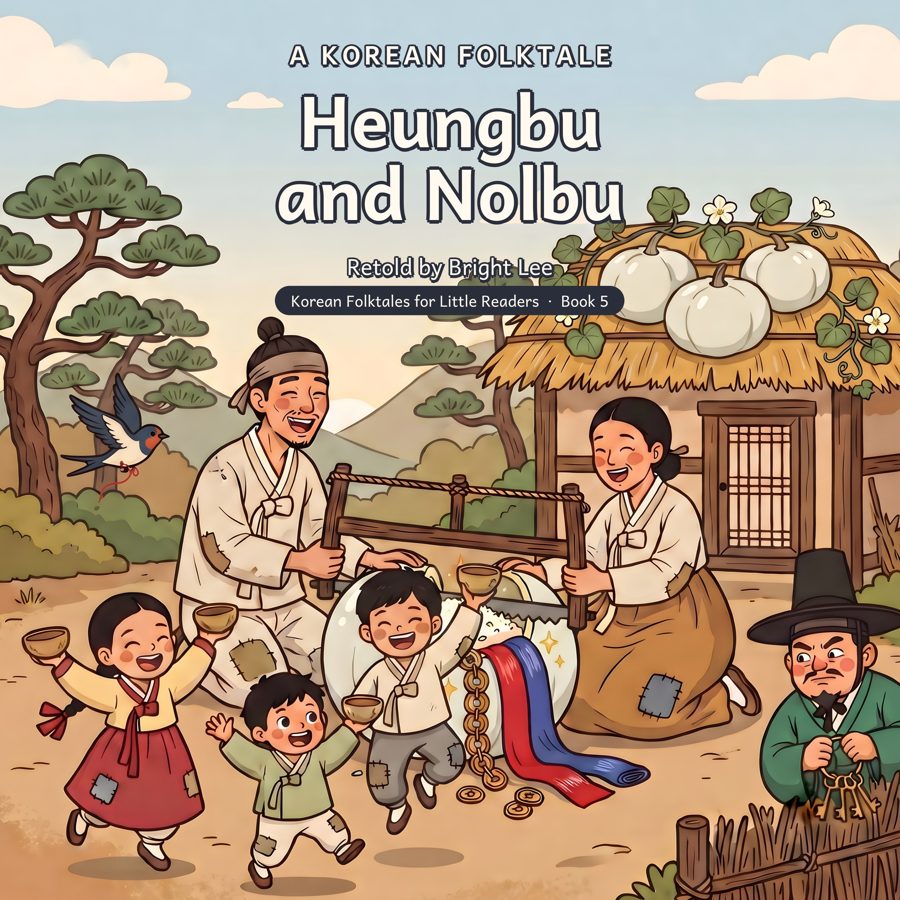
Journal · Korean Folktales for Little Readers · Book 5
Why is a swallow a lucky bird in Korea?
"Heungbu and Nolbu" is one of the best-known folktales in Korea. It is also told as pansori, a long story that one singer sings and acts out to the beat of a drum. People have enjoyed this story-song for more than two hundred years. In the old tale, Heungbu has more than ten children!
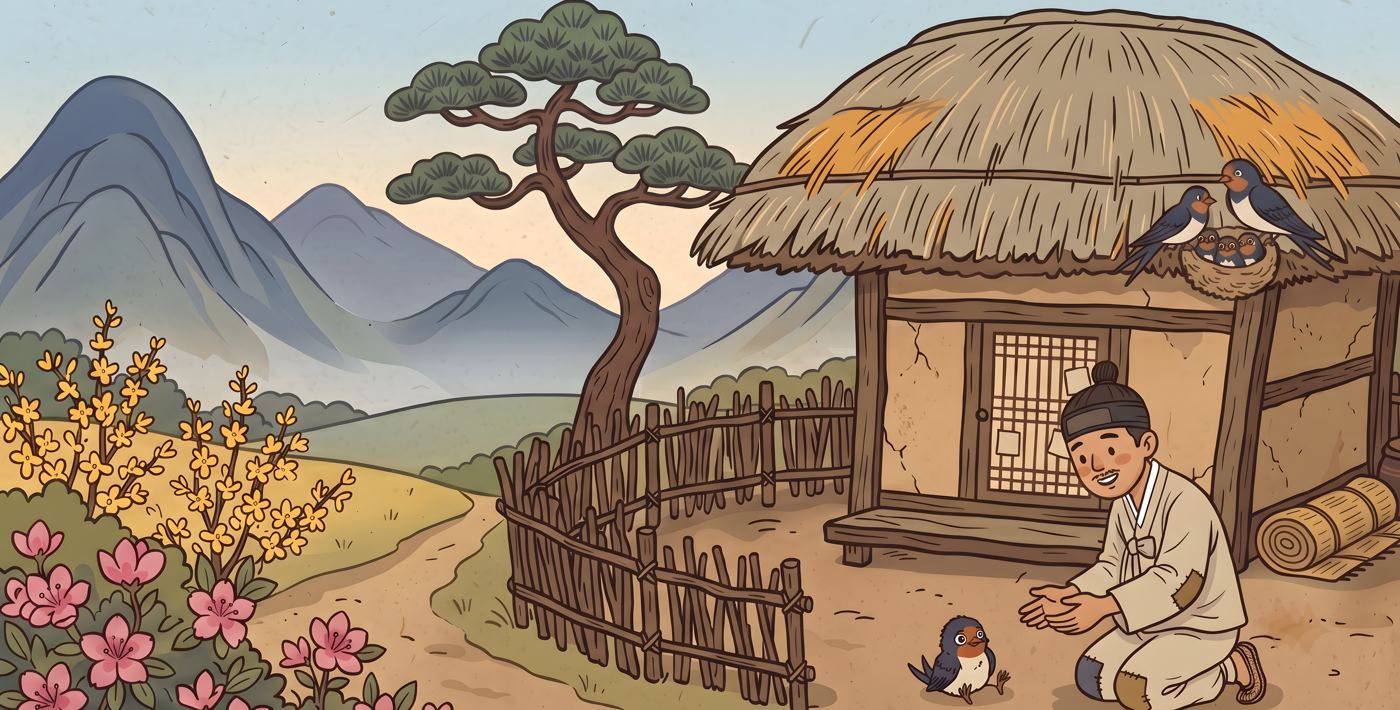
Swallows were a happy sign in old Korea. They flew south for the winter and came back in spring to build mud nests under the roofs of houses. People said a swallow's nest under your roof would bring good luck. In the old tale, Nolbu hurts a swallow on purpose. In this book, nobody hurts the swallow.
A bak is a big round gourd. Farm families let the vine grow over their straw roofs. They ate the soft inside, and they dried the hard shell to make a bagaji, a bowl or a water scoop. Sawing open a gourd was a happy job at harvest time.
Today, Koreans still say a greedy person has "a Nolbu heart." And children still sing along with Heungbu: "Back and forth, back and forth, saw, saw, saw!"