Journal · Korean Folktales for Little Readers · Book 8
Is Kongjwi the Korean Cinderella?
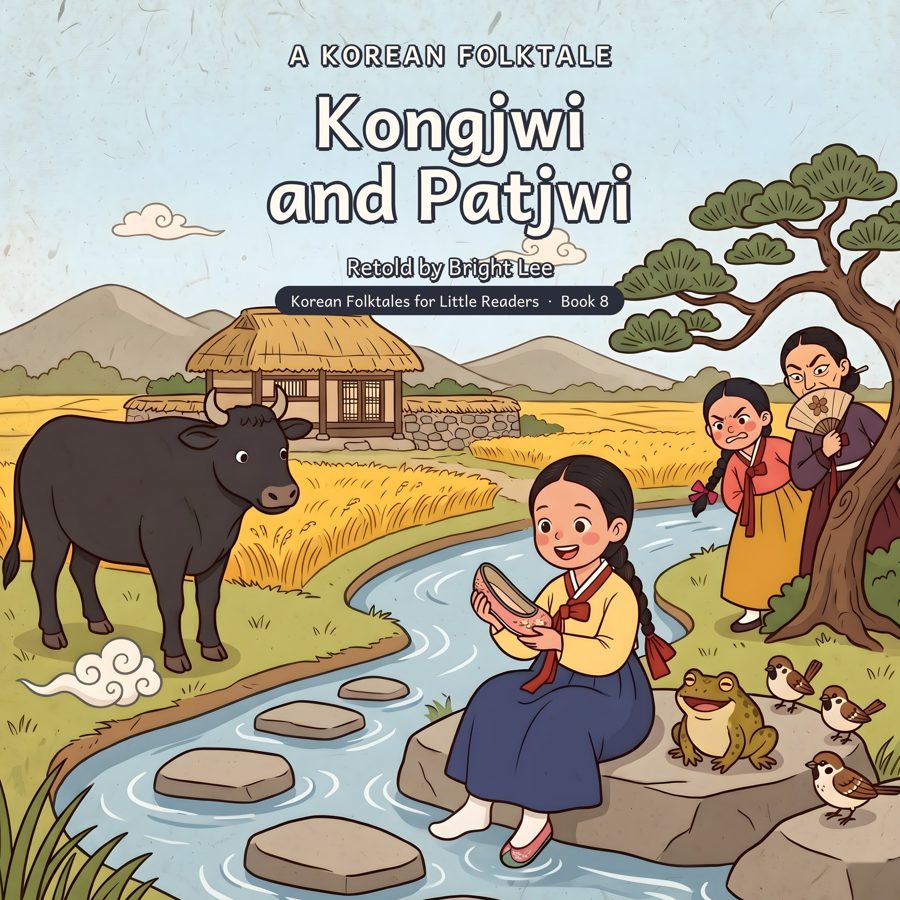
"Kongjwi and Patjwi" is one of the best-known folktales in Korea. People sometimes call it "the Korean Cinderella." Like Cinderella, it has a kind girl, a mean stepmother, and a lost shoe. It was told for hundreds of years and written down as a story book in the Joseon era.
In the long old version, there is more after the lost shoe, and some of it is quite sad. This book ends at the happy part. In the old story, Kongjwi also marries the magistrate. In this book, she is a young girl, so he gives her a prize for being kind and hardworking. Patjwi says sorry, and Kongjwi says, "Let's share!"
The girls' names come from beans. Kong is a soybean, and pat is a small red bean. Korean families cook with both every day.
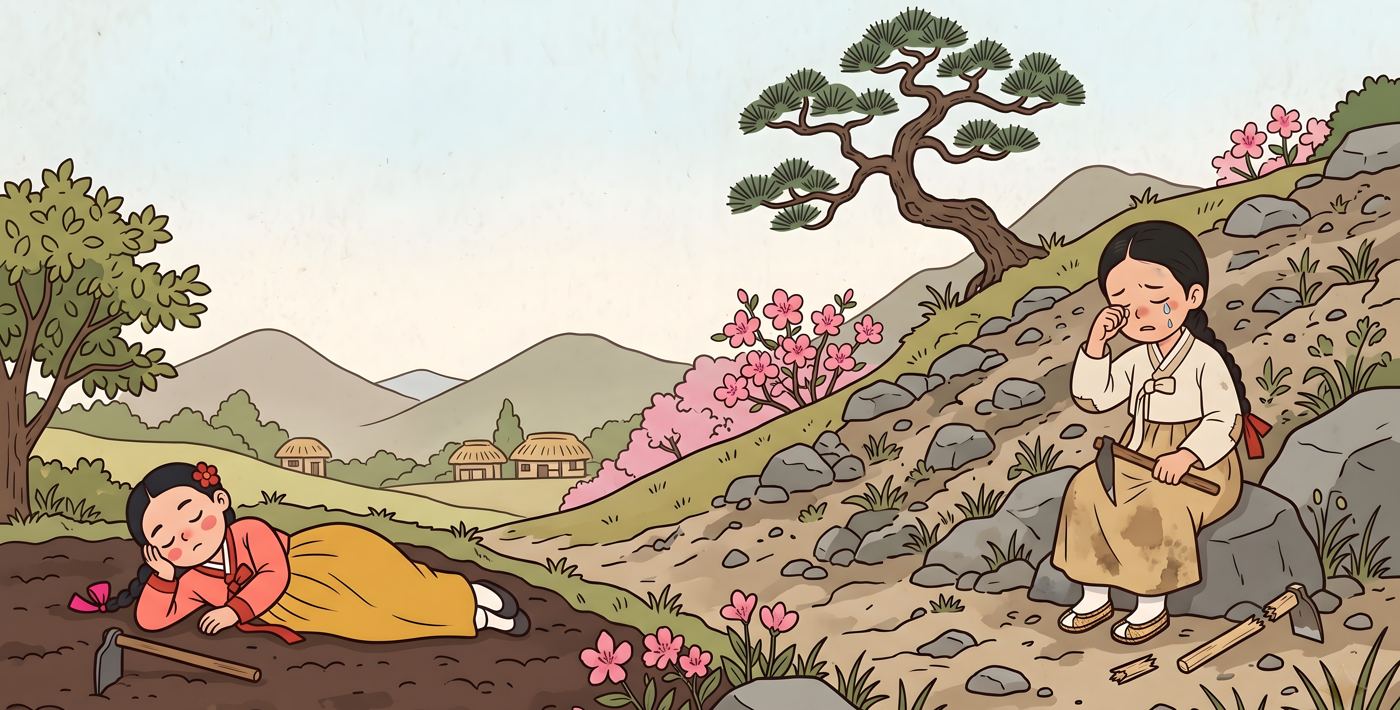
The chores in the story were real chores. A homi is a short Korean hand hoe, used while squatting to weed and dig. A wonnim, or magistrate, was the man who ruled a town for the king.
Kkotsin are "flower shoes": soft silk shoes with flowers sewn on the toes. In old Korea, girls wore them on special days. Today, Korean children still wear kkotsin with their hanbok on holidays like Seollal, the Lunar New Year.
When you read aloud, ask the question in the story together: "Who will help Kongjwi?" Then let your child be the helpers: "Moo!" "Ribbit!" "Tweet!" After the story, you can ask, "When do you say, 'I will try'?"